Designing a Game, Part 2: What Makes a Game
What makes a game a game?
Not the genre, and not the checklist of features. I mean the thing that makes you want to come back to it tomorrow. I’ve been thinking about that a lot, because for the first couple of weeks, I was building the wrong one.
Another Quake
When I started VolythEngine, it naturally grew into a Quake-style shooter. That’s where my head goes: brush-built levels, baked light, a dark map called Gloom, a whip, monsters, a gun I modelled myself. And it was working. It was fun to build.
But a Quake-like is a thing that’s been done a million times, by people with a lot more time and money than me, and some of them are brilliant at it. The world doesn’t need my version. I could make a solid one, and nobody would miss it if I didn’t.
So I let it go, and I started paying attention to what kept coming out of me when I wasn’t trying to make anything in particular.
Letting it flow
In Part 1 I wrote about ordering a little board for my Amiga, waiting for it to show up in the post, opening the machine and plugging it in, and how that felt exactly like a game should. That line has stuck with me more than anything else I’ve written here.
I think that’s my answer. A game, for me, is a feeling you want to have again. It’s the satisfaction of doing something with your hands and having it work. It’s a place you know your way around, with things in it that are yours. The games I love most take ordinary stuff, like fixing up a car one bolt at a time or keeping a little life running, and make it matter because it’s yours.
So that’s what I’ve been doing: letting it flow, and rolling with whatever comes out. And what comes out is my life. The Amiga and the copied disks. The scene. Years of building and modding guitar pedals at the bench. Taking things apart, fixing them, putting them back together better. None of that came from a design document. It came from me.
The hacking game
It started as a hacking game. A young hacker, a cold little house, jobs coming in over the wire.
But seriously, how many hacking games are there? Green text, a terminal, a progress bar, a timer. It’s been done, and done well, many times. The longer I spent with it, the more I realised the hacking wasn’t the part I cared about. It was everything around it.
So what’s it about?
I’m not saying yet. But I’ll give you some hints.
There’s a disk copier, and you’re going to use it a lot.
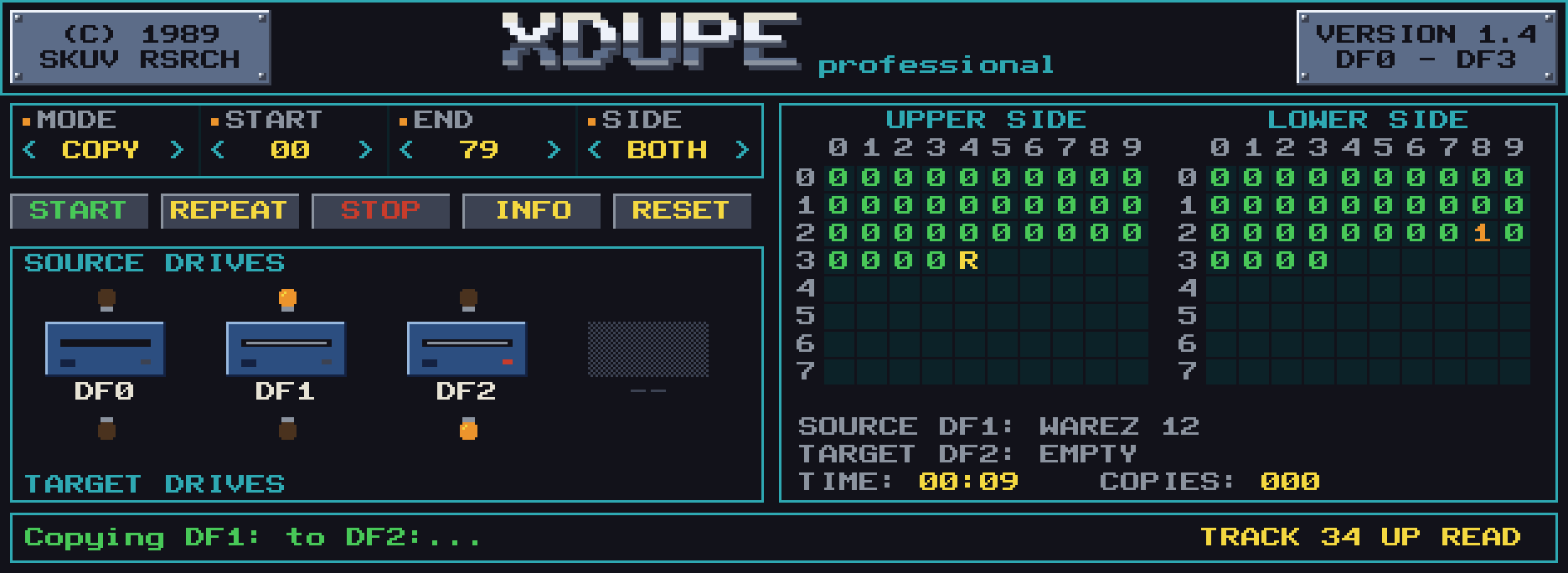
XDupe Professional. Copyright 1989, apparently.
There’s a soldering iron, and the solder behaves like solder. Get the joint hot and feed it right, and it flows into a shiny little cone. Rush it, and you get a dull ball that only sort of conducts. Put a meter on a cold joint and the reading flickers.
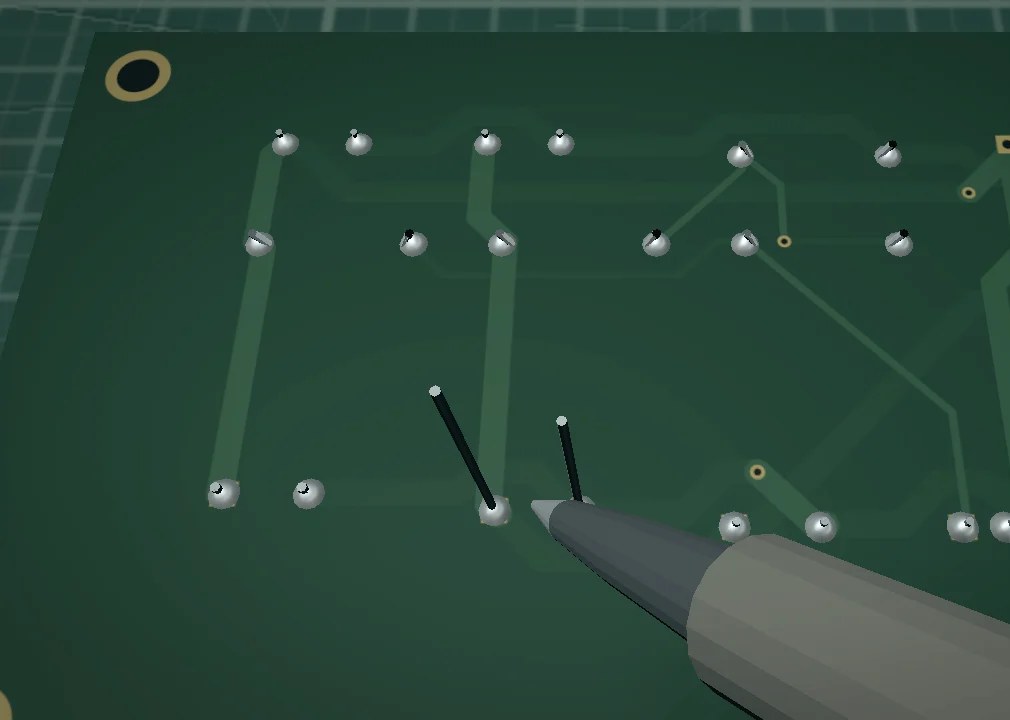
At the bench.
The scene is all through it, the crews and their logos and their stickers, and their gossip about who beat who.
And there are going to be demos. Lots of them. The first is a real one, on a worn floppy with my logo on the label and a slip stuck to it that says TURN IT UP.
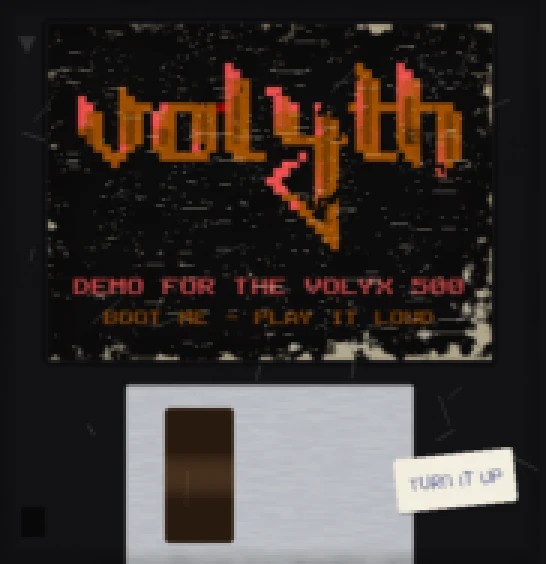
Boot me. Play it loud.
Put it in the drive and the screen fills with rolling bars while the drive clicks away, decrunching, exactly like the intros on the copied disks I grew up with.
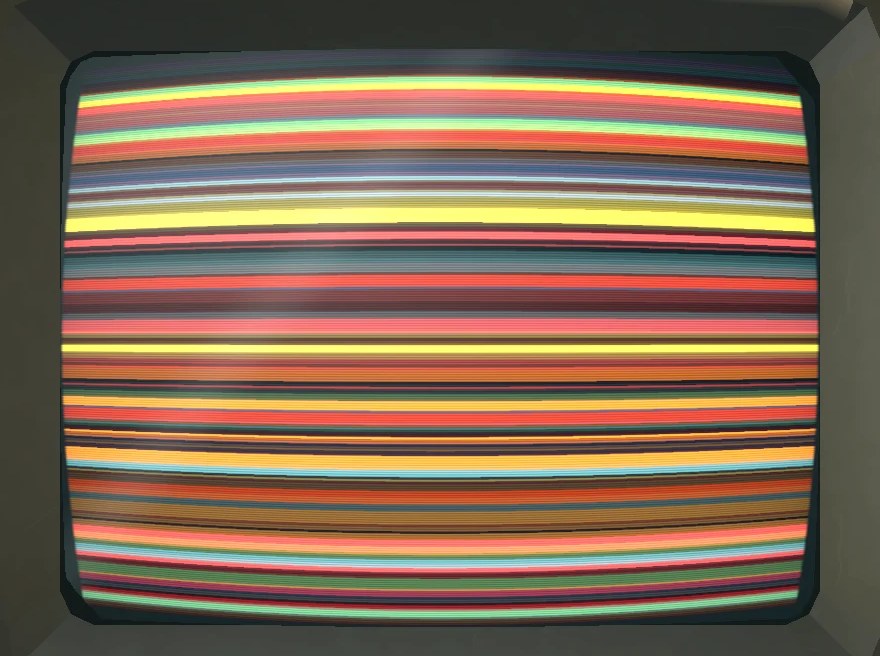
Decrunching.
Then the logo comes up out of the dark.

A little demo for the Volyx 500.
And then it goes: copper bars, a starfield, chrome bobs, a chequered floor rushing at you, and a sine scroller of greetings, all to my own music. It’s the kind of thing I used to stare at as a kid without understanding a word of it.
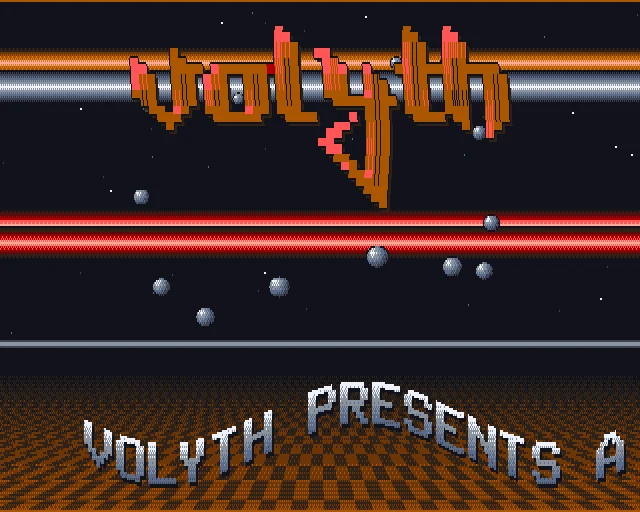
VOLYTH presents. Turn it up.
And somewhere in the house, on a steel shelf, there’s an old monitor that’s always on. Late at night, it’s never quiet.
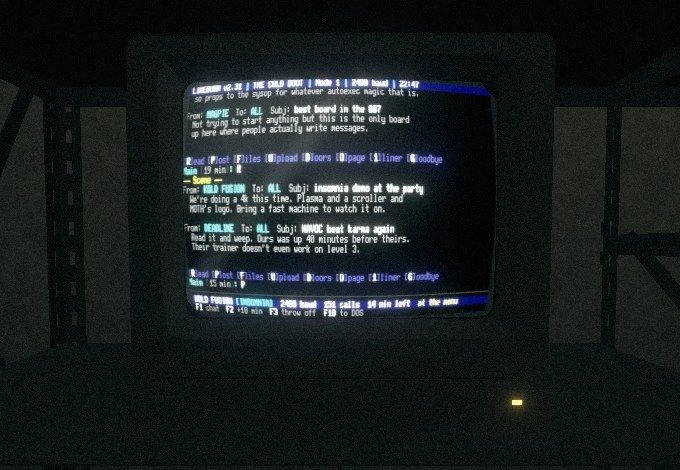
Somebody’s always online.
That’s all you’re getting for now.
What makes a game a game
I don’t think there’s one answer. But I think it has to be something you can’t stop thinking about, and it has to be yours. Mine came out of a woodpile, a box of copied disks and a lot of years at a workbench.
Rolling with it doesn’t mean saying yes to everything, though. Letting it flow is how the ideas come, but scope is how a game actually gets finished. The more I work on this, the more I’m able to settle on the scope: what it is, and just as importantly, what it isn’t. That might be the most important part of all of this.
So I’m rolling with it. Inside the lines.