The Scene
I’ve been fascinated by the scene since I was a kid. I just didn’t know it had a name yet.
The Commodore 64
As a kid I had a hand-me-down Commodore 64, and it came with a box full of copied disks. Before almost every game, something else would load first: a group’s logo, a line of text scrolling across the screen, and music that was better than it had any right to be.
I was so young I didn’t understand what any of it meant. Who were these people? Why were their names on my games? What did “greetings to” mean, and who were all the people being greeted? It felt like finding messages left in a secret language, and I knew they were for someone, just not for me yet.
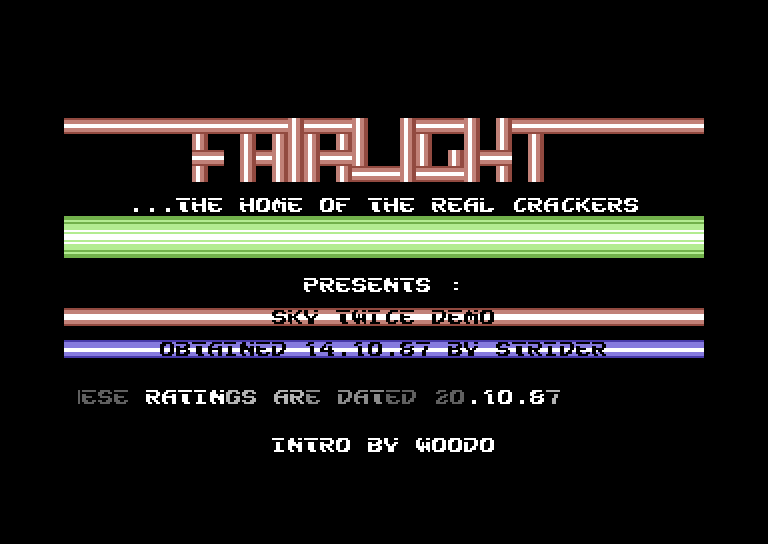
Fairlight’s intro from 1987, often called the best-known C64 intro of them all. The home of the real crackers.
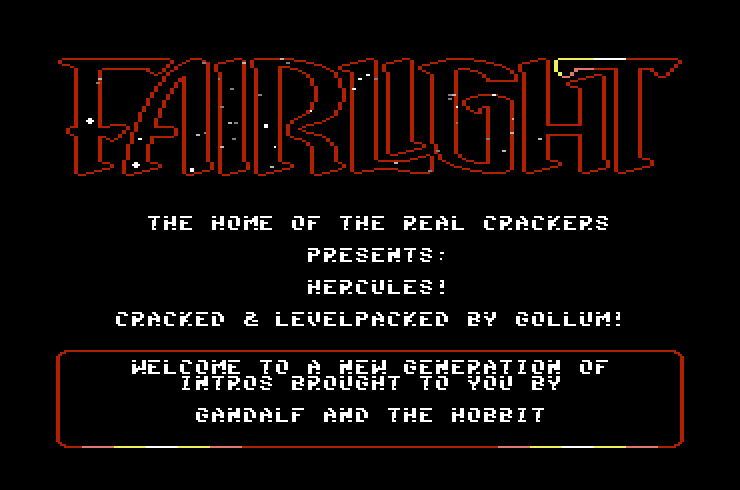
Fairlight again, a year later.
The Amiga 1000
When I was older, I got another hand-me-down: an Amiga 1000. Again, it came with tonnes of copied disks. And again, the intros came first, only now they were from the big hitters, and they were on another level. Bigger logos, richer colours, starfields, chrome lettering, scrolling text that went on for ages.
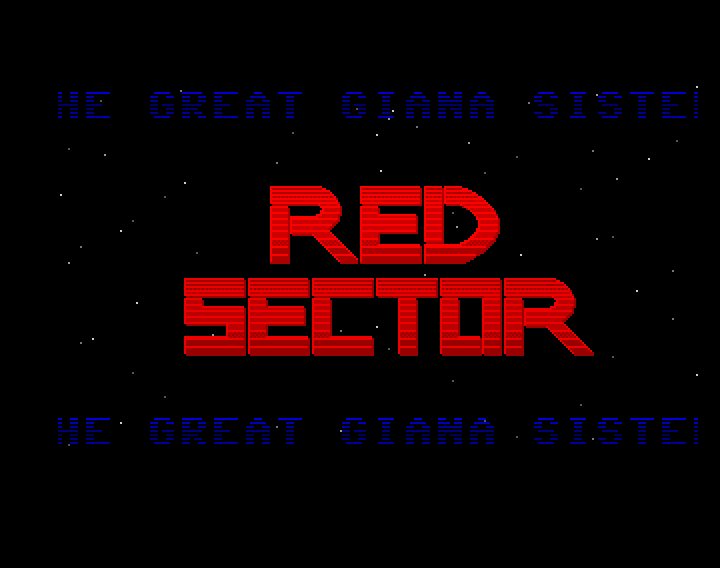
Red Sector Inc., on The Great Giana Sisters, 1988.
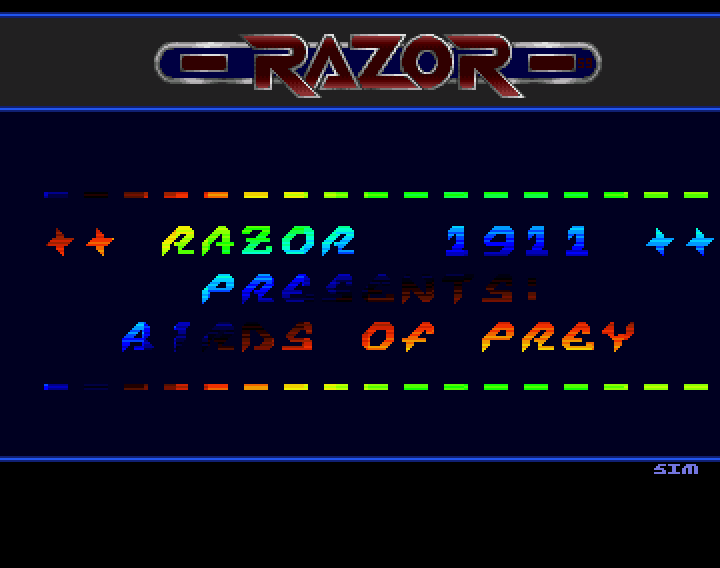
Razor 1911 presents: Birds of Prey, 1991.
By then I was starting to get it. This was a whole underground. Groups raced each other to be first, signed their work with logos and handles, and sent greetings and insults to each other in the scrolltext. Every intro was someone showing off what they could squeeze into a few kilobytes at the front of somebody else’s game. It was art, competition and attitude, all at once, and I was hooked.
A short history of the scene
It started with cracking. In the 80s, games shipped with copy protection, and a new kind of group formed to strip it out. Getting a fresh game cracked and into circulation before anyone else was everything. The intro was the group’s signature: a logo, a tune, and a scroller full of greets to friends and digs at rivals. To be first was to be elite.
The big names. The scene was strongest in Scandinavia and the rest of northern Europe, but it reached everywhere.
- Fairlight was founded in Sweden over Easter 1987 by Strider and Black Shadow. They took the name from the Fairlight CMI, the synthesizer Strider had seen Jean-Michel Jarre use. Their C64 intro, set to music from the game Druid II, became one of the most recognised intros ever made, and it’s the one at the top of this post.
- Razor 1911 started in Norway in 1985, as Razor 2992. The new number wasn’t random: 1911 is 777 written in hexadecimal. According to the US Department of Justice, they’re the oldest software cracking group still active on the internet.
- Red Sector Inc., behind the Giana Sisters intro above, was founded in Canada in 1985. In 1990 they joined forces with Tristar to become TRSI, a name that’s still releasing today.
How they talked. There was no internet, so everything moved by hand, by phone or by post. Groups had swappers whose whole job was mailing disks all over the world, and a lot of them coated their stamps in glue so the postmark would wash off and the stamp could go out again. Technically that’s a crime. Groups ran their own bulletin boards too, which you’d dial into with a modem; Fairlight’s first was called The Pleasure Dome. News, gossip and rankings went round in diskmags, magazines that came on a floppy. And the scrolltext was the scene’s group chat: greetings, challenges, insults and the occasional phone number, read by everyone who loaded the game.
From intros to demos. The intros got so ambitious that they stopped needing a game at all. Groups started making demos, pure showing off: music, graphics and code pushed further than the machine was supposed to go. Copy parties turned into demoparties, with competitions and big screens. Assembly started in Finland in 1992, organised by the groups Complex, Rebels and Future Crew, and it still runs in Helsinki every year. Revision, held every Easter in Saarbrücken in Germany, is the biggest pure demoscene party in the world.
Some of the demos are legendary. Spaceballs, from Norway, made State of the Art in 1992, with dancing silhouettes cut perfectly to the beat. Kefrens, from Denmark, made Desert Dream in 1993. And Future Crew, from Finland, won the PC demo competition at Assembly in 1993 with Second Reality, still one of the most famous demos ever made.
Where it went. A lot of the people from the scene ended up building the games industry. Members of Future Crew founded Remedy in 1995, the studio that went on to make Max Payne. And in 2020, Finland added the demoscene to its national inventory of living heritage, the first piece of digital culture ever listed. Germany and Poland followed the next year, and more countries have since.
Not bad for a bunch of kids swapping disks through the mail.
It never left
That stuff shaped my taste more than almost anything. You’re looking at it right now: this whole site is dark screens, text art and chunky pixels, because that’s what the inside of a computer is supposed to look like to me.
Working it into the game
The game I’m making is built on VolythEngine, and the scene runs all the way through it. I won’t give much away yet, but here’s a taste.
It has its own scene: twenty-seven crews of my own, with names like iNSOMNiA, HAVOC, Requiem, Umbra and Voodoo. Each one has a logo drawn in text art, the way it would have sat at the top of an NFO.
______________________________________________________________________________
XX   XXXXXX      XXXXXXXX   XXXXXXX     XXXX XXXX    XXXXXX    XXX    XXXX
XX\ XXXXXXXXX  XXXXXXXXXX\ XXXXXXXXX  XXXXXXXXXXXX  XXXXXXXXX  XXX\ XXXXXXXX
XX\ XX\____XX\ XXX\____XX\ XX\____XXX XXX\_XXX\_XX\ XX\____XXX XXX\XXX\___XXX
XX\ XX\    XXX XXXXXXXXXX\ XX\    XXX\XX\. XX\. XXX XX\    XXX\XXX\XXXXXXXXXX\
XX\ XX\    XXX\ XX\___XXX\ XX\    XXX\XX\  XX\  XXX\XX\     XX\XXX\XXXXXXXXXX\
XX\ XX\    XXX\XXXXXXXXXX\ XXXXXXXXX\.XX\  XX\  XX\.XX\     XX\XXX\XX\_____XX\
XX\ XX\    XX\. XXXXXXXX\.  XXXXXXX\. XX\  XX\  X\. XX\     X\.XXX\XX\     X\.
 _.  _.     :\  ::\___:\.    _____:\  :\.   _.  :\   _.      . :\_. _.      .
             .   .\    .           .  .\         .             .\
                  .                    .                        .
___________________________ p r o d u c t i o n s ____________________________
And of course they have stickers. Dark vinyl, neon lettering, a few of them foil. In the game, stickers are real things you collect and put on your gear, and they wrap round the edges of whatever you stick them on, the way a real one would.
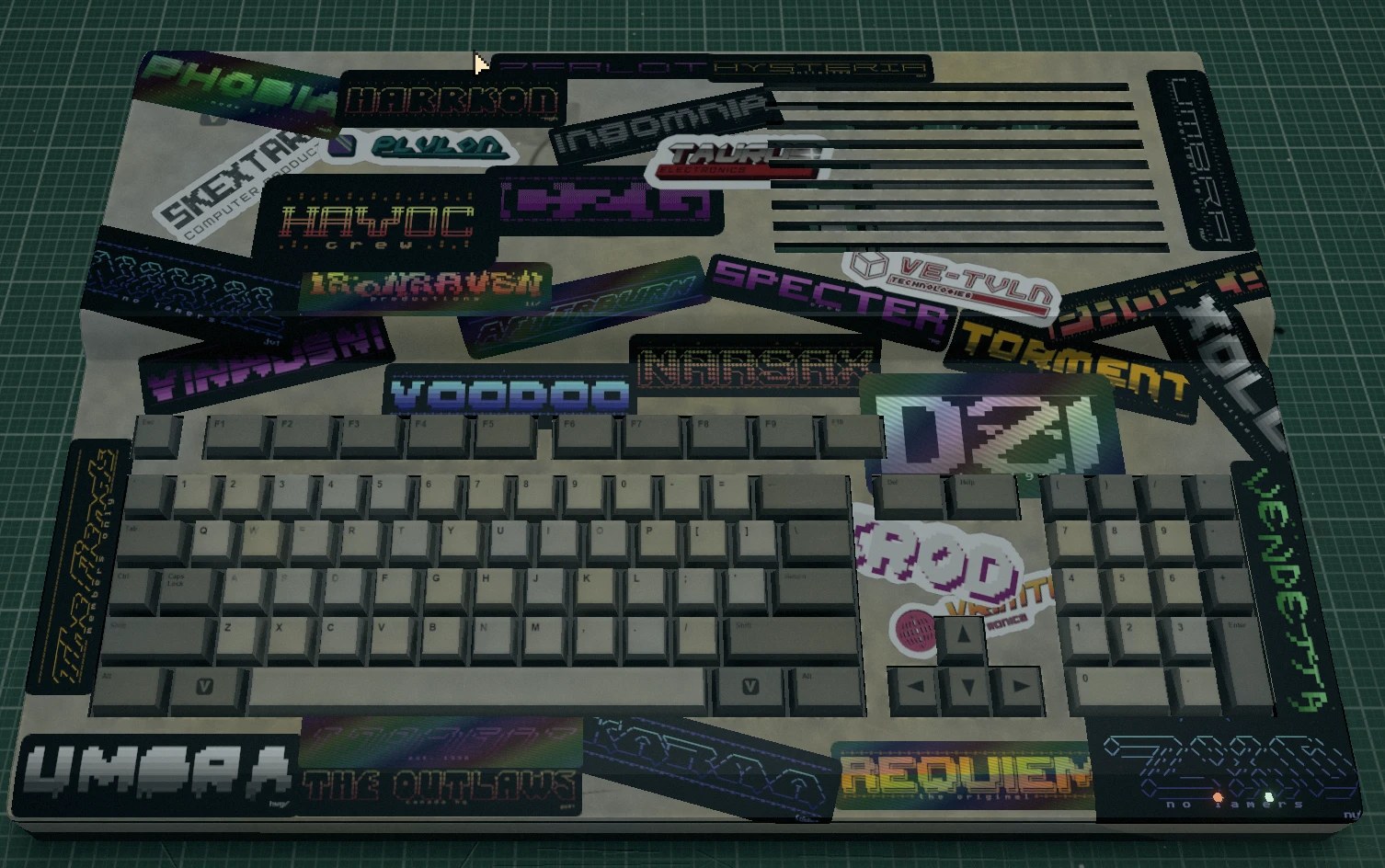
My Volyx 500, buried in crew and company stickers. The foil ones catch the light.
The Volyx 500 is my own take on the Amiga 500, and I modelled it myself. Seeing it covered like that is exactly the feeling I wanted: a machine that’s obviously been loved, and obviously been somewhere.
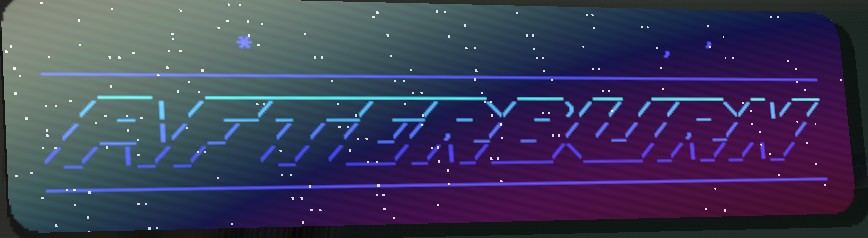
AFTERBURN, in holo.
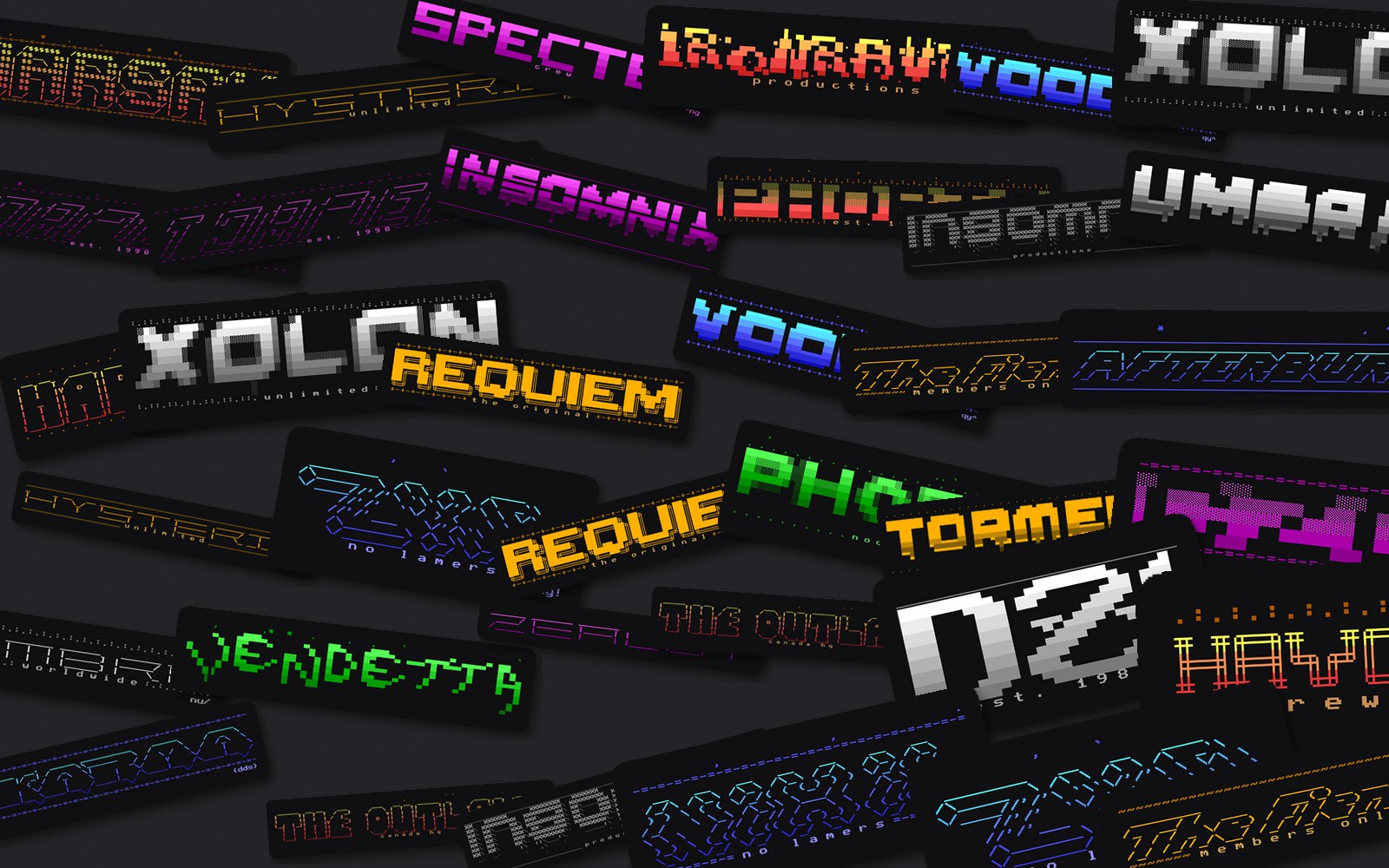
A lid’s worth of crews.
The copied disks are in there too. Every floppy has its own label, typed, printed or scrawled in marker, and one of them is an intro by HAVOC: stars, copper bars and a sine scroller, just like the ones that came on my disks.
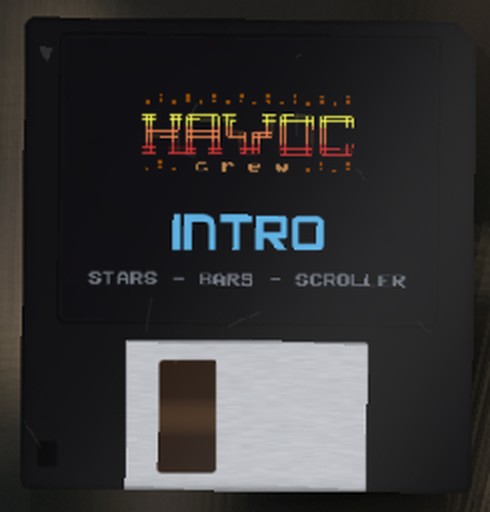
A HAVOC intro disk, from the game.
Don’t bother looking any of these crews up. None of them ever existed.
Yet.
Screenshots of the original intros come from the scene archives CSDb and Demozoo.